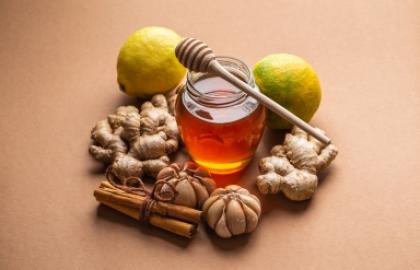
As the golden warmth of autumn fades and the crisp, cold air of winter settles in, our bodies undergo a distinct shift. In the modern world, winter is often associated with the flu season, dry skin, and lethargy. However, the ancient wisdom of Ayurveda views winter quite differently. It is considered the season of strength—a time when nature offers us a unique opportunity to build immunity, nourish our tissues, and store vitality for the year ahead.
To harness this potential, one must align their daily habits (Dinacharya) with the rhythm of the season. This guide explores how to optimize your health during winter using time-tested Ayurvedic principles, dietary adjustments, and powerful formulations like Swamala Chyawanprash and Swarna Bhasma.
The Ayurvedic Perspective: Winter and Agni
In Ayurveda, winter is divided into two phases: Hemant Ritu (early winter) and Shishir Ritu (late winter). During this time, the body’s core retains heat to protect itself from the external cold. This concentration of heat in the core ignites the Jatharagni (digestive fire).
Have you noticed you feel hungrier in winter? That is your Agni at work. It is stronger now than at any other time of the year. This powerful digestive fire allows you to digest heavier, more nourishing foods that would be difficult to process in summer. However, if you do not provide enough fuel (food) for this fire, it begins to consume the body's own tissues (Dhatus), leading to weight loss and increased Vata dosha (air and space element), which manifests as dry skin, joint pain, and anxiety.
Therefore, the primary goal of an Ayurvedic winter regimen is to balance Vata dosha and fuel the digestive fire effectively.
Winter Diet (Ahara): Fueling the Fire
To pacify the cold and dry nature of Vata, your winter diet should focus on foods that are warm, moist, heavy, and grounding.
Lifestyle Habits (Vihara): The Art of Preservation
Diet alone isn't enough; your daily routine must also adapt to the cold.
1. Abhyanga (Oil Massage)
The most critical lifestyle practice for winter is the daily application of warm oil, known as Abhyanga. Using warm Sesame oil or Mahanarayan oil before a bath creates a protective layer on the skin, trapping heat and preventing dryness. It also soothes the nervous system, which is governed by Vata.
2. Sun Bathing (Atapa Sevana)
Exposure to the morning sun is highly recommended in Ayurvedic texts. It combats the "winter blues" (Kapha stagnation in the mind) and provides essential Vitamin D for bone health.
3. Active Exercise (Vyayama)
Because your strength is naturally higher in winter, this is the best time to increase the intensity of your workouts. Engage in strength training or vigorous Yoga (like Surya Namaskar) to keep the body warm and prevent Kapha accumulation (congestion) in the chest.
The Royal Rasayanas: Winter Superfoods
While food provides daily fuel, winter is the ideal season for Rasayana Therapy (Rejuvenation Therapy). This involves using potent herbal formulations to boost immunity (Ojas) and delay aging.
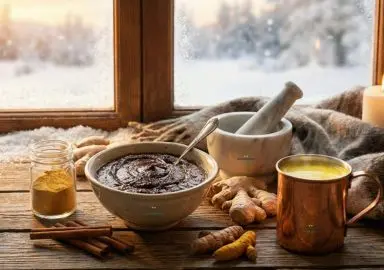
The Winter Shield: Swamala Chyawanprash
Chyawanprash is arguably the most famous Ayurvedic formulation, but for winter, standard Chyawanprash may not be enough. This is where Swamala Chyawanprash (specifically formulations like Dhootapapeshwar Swamala) shines.
Swamala is often called "Chyawanprash for the elite." It is enriched with Suvarna Bhasma (Gold Ash), Silver, and Praval (Coral), along with the standard Amla base.
The Ultimate Vitalizer: Swarna Bhasma
For those who feel perpetually cold, have low energy, or suffer from weak immunity despite a good diet, Swarna Bhasma (Gold Ash) is the ultimate remedy. In Ayurveda, Gold is not just a metal; when purified and incinerated into a nano-particle ash (Bhasma), it becomes a powerful therapeutic agent.
Conclusion
Winter does not have to be a season of sickness and hibernation. By understanding the principles of Ayurveda, we can see it for what it truly is: a season of restoration.
By switching to a Vata-pacifying diet, keeping your body oiled and warm, and supplementing with powerful Rasayanas like Swamala Chyawanprash and Swarna Bhasma, you can turn winter into your healthiest season yet. Listen to your body, feed your inner fire, and let the ancient wisdom of Ayurveda guide you through the cold.





Best Treatment for Constipation can be done using ayurvedic supplements and treatment. Consult with our doctors...